
People often ask: “Why volunteer at a hospice?” With around 2,445 volunteers supporting hospices around Wales, the answer is simpler — and more human — than many expect.
Hospice volunteering is about offering time, attention, and steady presence to people living with life-limiting illness. It’s not dramatic or heroic. It’s a collection of small, meaningful moments that help people feel more at ease during a challenging period of life.
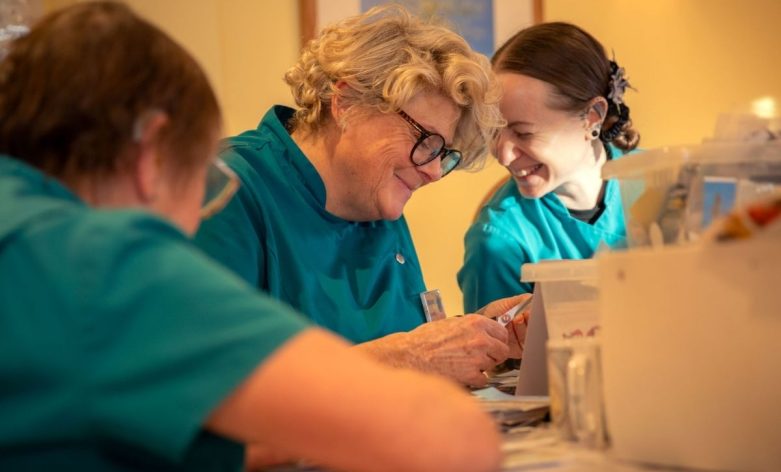
At Skanda Vale Hospice, this approach is woven through our entire team. In fact, most of our clinical team — nurses, doctors, and carers — are volunteers. They work seamlessly alongside paid colleagues, creating an environment where care is shaped by compassion, choice, and enough time to do things properly.
Why Are Volunteers Important to Hospices?
Hospices depend on volunteers not because they replace something missing, but because they bring something essential: the freedom to slow down.
A hospice is a blend of many roles. Nurses bring clinical insight. Therapists bring experience and skill. But volunteers bring variety—a wide span of everyday knowledge, steady presence, humour, patience, and the kind of grounded warmth that helps people feel at home.
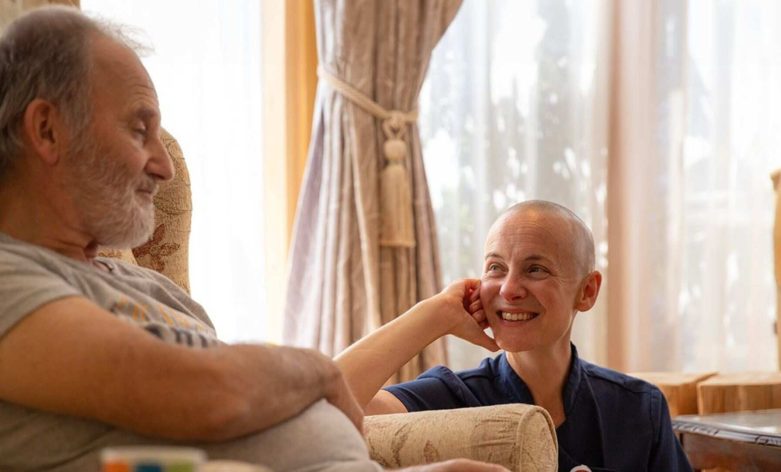
“A lot of patients come in for the first time and they’re very wary. They don’t know what to expect. What they don’t expect is giggles. People painting, people talking and chatting, laughter, drinks and biscuits. We often say somebody comes in looking pale and frightened, then they go out with rosy cheeks and having had a good day. That’s what it’s all about.”
Jane Davies, Healthcare Support Workers Lead
When people ask “Why are hospice volunteers so important?” the honest answer is this: they help keep the hospice human. They protect the unhurried, relational quality that lies at the heart of the hospice movement.
What Are the Benefits of Being a Hospice Volunteer?
People often imagine hospice volunteering as profoundly heavy—a calling for morally advanced individuals who meditate at dawn and never lose their car keys.
Yet volunteers talk about something quite different: friendship, community, learning and an unexpected lightness that stays with them long after they’ve gone home.
Here are some of the benefits volunteers talk about:
1. Feeling part of something grounded and real
Hospice life is built on simple human acts: preparing lunch, offering a warm blanket, washing up, listening to someone’s story. These moments help volunteers feel useful in a very immediate way.
Carer Mim Jones told us:
“It opened me up. You feel love for somebody you’ve never even met before. Making a cup of tea, saying hello — little acts of kindness.”
2. You learn to be present
Much of hospice life is about attention—being able to sit with someone without needing to fill the silence. Many volunteers say this skill follows them home, shaping how they listen to friends, family, and even themselves.
3. Gaining confidence and new skills
Many volunteers arrive with no previous experience in care. With training and support, they learn new practical skills, develop emotional steadiness, and often discover strengths they didn’t know they had.
4. A sense of lightness at the end of the day
Mim described leaving her shift feeling “elevated” — driving home with music turned up, feeling energised. That unexpected uplift is something many volunteers share. Studies support this, with 70% of volunteers reporting greater life satisfaction than those who don’t volunteer.
5. Being part of a team that values time
In many workplaces, time feels scarce. Here, it’s treated as something precious. Volunteers often find the slower pace restorative—an antidote to the rush of everyday life. For some, it restores their confidence in care itself.
Volunteer nurse Cate put it simply:
“It’s given me joy back in nursing because I can do nursing the way I think it should be done. I can spend time.”
6. Restoring faith
Sometimes it’s easy to forget that humans can be… well, human. Then you step into a hospice where people give their time freely, strangers show kindness without an agenda, and care is measured in attention, not minutes.
Patients feel the difference immediately.
“Here, it’s a bit like heaven on Earth. It’s renewed my faith in human nature. It really has. I mean I was getting to be very sceptical about the human race, but I’ve discovered here a vein of humanity that is very, very special.”
Peter Butler, Skanda Vale Hospice patient.
If you’re curious about volunteering—whether for a few hours a week or something more regular—we’d love to hear from you. You don’t need clinical experience. You don’t need to be an expert listener. You simply need the willingness to show up and share your time.
What Qualities Do You Need to Work in a Hospice?
Working or volunteering in a hospice doesn’t require a particular personality type. People imagine they need to be endlessly calm, or incredibly strong, or emotionally untouched by illness. In truth, the qualities needed to support patients and families are very human and very ordinary:
Steadiness
The ability to be present. Not unshakable; just willing to stay with someone, even in silence.
Curiosity
Volunteers don’t arrive with all the answers. They learn by paying attention.
Respect for pace
Hospice care is unhurried, so volunteers who move gently — physically and emotionally — help maintain a peaceful environment.
Practical kindness
Small gestures matter: making tea, offering a cushion, noticing when someone looks tired.
Humour
Not forced, just the natural lightness that helps people feel at ease. As volunteer carer Nicky Gilbert says:
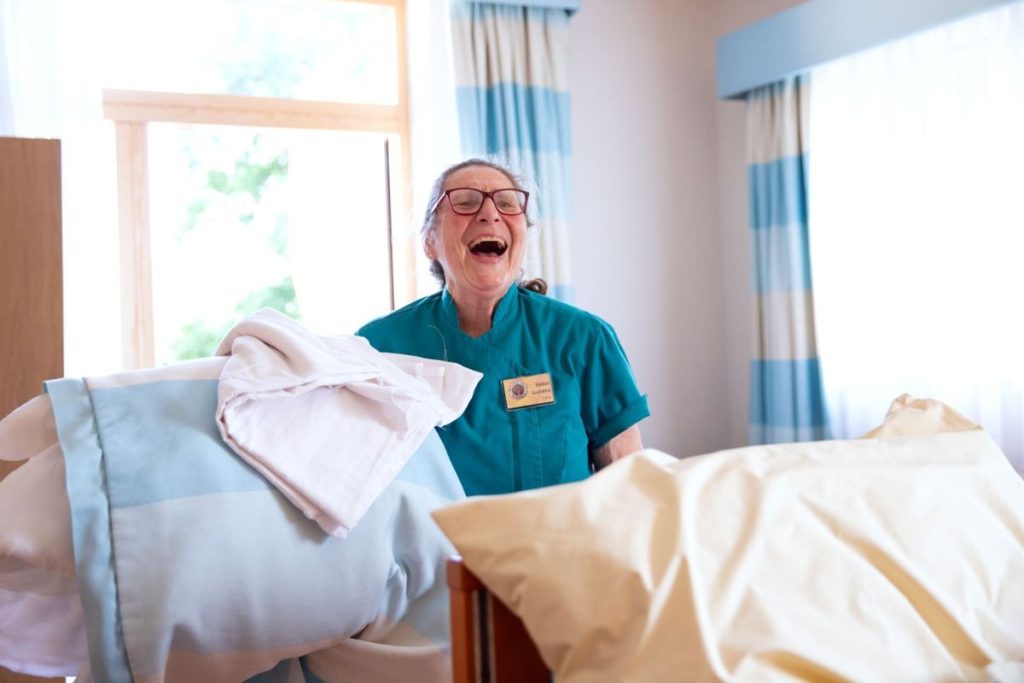
“Life here is probably not what most people imagine. It’s a happy place. Full of laughter… a good dose of naughtiness.”
Reliability
Patients depend on you being there when you say you will. This matters a lot.
These qualities aren’t rare. They appear in people from every background — retired nurses, people returning to work after a break, parents with limited free time, students wanting meaningful experience — or those who simply feel a quiet pull toward service.
Why Do People Volunteer at a Hospice?
People volunteer for different reasons: wanting to help, wanting to learn, wanting to feel part of something meaningful. But the common thread is that they tend to leave with more than they expected — a sense of perspective, a deeper way of seeing others, and the knowledge that small actions matter.
Nicky summed up the experience of many:
“What we receive is so much more than we’re able to give. We’re the beneficiaries of the care we offer.“
If you’re considering hospice volunteering, whether at Skanda Vale or elsewhere, the best way to understand it is to try it. Spend a little time in the environment. Notice how natural it feels to help in simple ways.
free accommodation for healthcare volunteers
Every volunteer story starts with someone wondering if they have something valuable to offer. The answer is always yes—but we know that making the leap from wondering to doing isn’t always straightforward.
For healthcare volunteers ready to commit to longer periods—from five days to three months or beyond—we provide free accommodation, removing one practical barrier to meaningful work.