
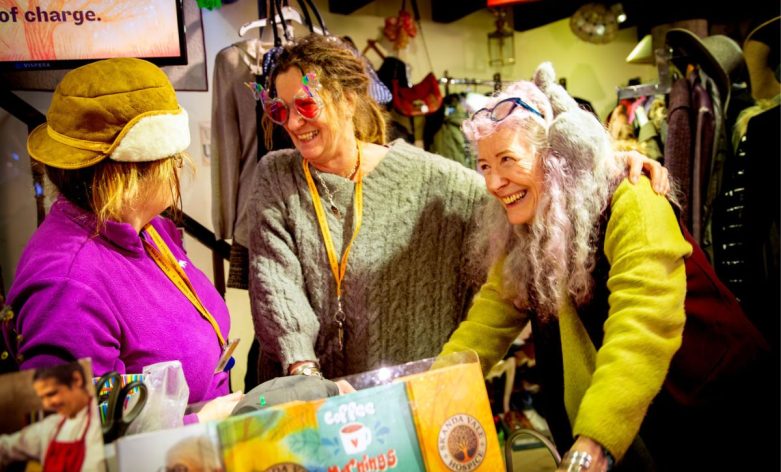
People often imagine volunteering in a charity shop as ‘helping out on the till for a bit.’ Sometimes it is. Often it isn’t.
A typical shift might include sorting a bag of donations that contains everything from a pristine Ralph Lauren jacket to a box of mystery cables. Helping someone who’s got exactly £10 and wants to stretch it across a birthday present, a book, and “maybe something warm if possible.” And realising — halfway through the day — that the shop somehow feels better than it did when you arrived.
That’s the thing about charity shop volunteering. You don’t just do tasks. You learn how things work — and how people work — in a very real, very human setting.
If you’re thinking about joining the 203,600+ charity shop volunteers across the UK, here are five of the skills you’ll likely pick up — often before you realise it.
1. Retail Confidence, Without the Pressure
Volunteering at a charity shop teaches you how to run a retail space properly.
Yes, that includes the till. But it also includes knowing what needs to be done next, monitoring the flow of the space, and handling whatever comes through the door without making it awkward.
One of our retail volunteers put it neatly: “The till is the easy bit. The skill is keeping everything ticking along without anyone feeling rushed, ignored, or flustered.”
It’s responsibility without pressure — confidence that builds quickly. These skills transfer to customer service, hospitality, or any role where you work with people.
2. Sorting, organisation and stock-flow
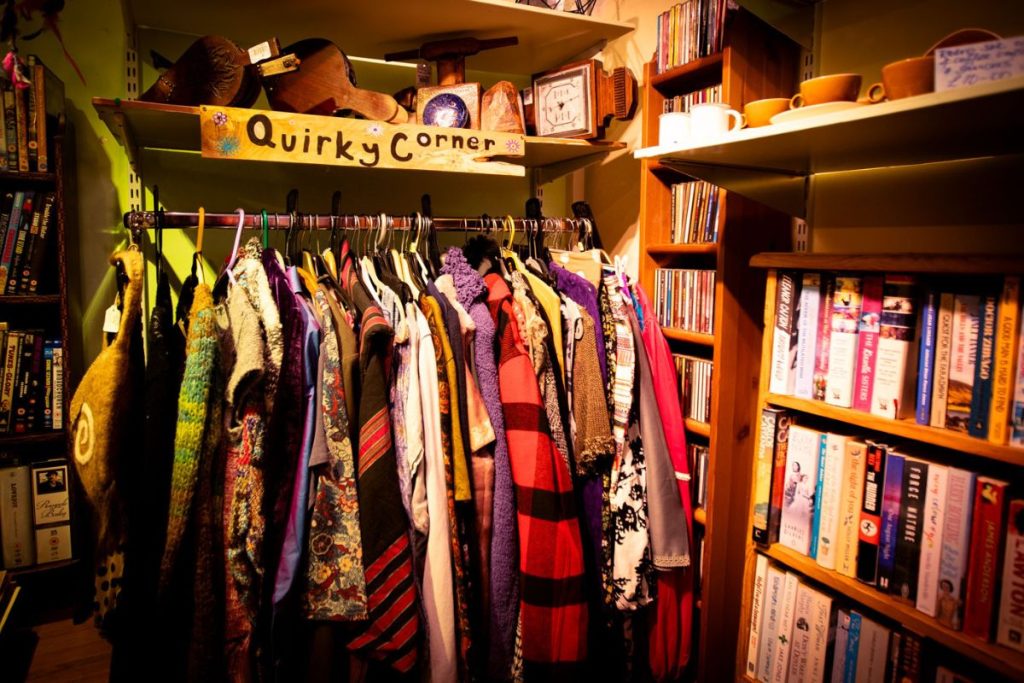
Charity shops get everything — the excellent, the ordinary, and the unexpected.
The skill isn’t receiving it — it’s turning it into something browseable. Charity shop volunteers learn to sort and rotate stock, and to make small changes that have a big impact. Clear sections. Fewer dead ends. Less “where do I even start?”
When things are easier to navigate, people stay longer. They enjoy themselves more. They buy more — not because they’re persuaded, but because they can actually see what’s there.
You also get practice in prioritisation — deciding what goes on the floor first, what needs steaming or mending, and what might work better online.
It’s not about perfection. It’s about making the space work for customers and the people volunteering there.

3. Selling Online (And Spotting What’s Worth the Effort)
Beyond the shop floor, many charity shops sell items online to reach more buyers and raise more funds.
Volunteers often get involved in online selling. This involves:
- Researching items
- Checking value
- Taking half-decent photos
- Writing descriptions that are honest rather than optimistic
This builds research and e-commerce skills that are useful if you’re interested in retail, marketing, or selling independently online.
You learn quickly what’s worth listing online and what isn’t. Not everything needs hours of research — but some items deserve a closer look.
There’s a particular satisfaction in this: rescuing something good from being overlooked, understanding its value, and sending it to someone who’ll genuinely appreciate it. It’s calm, focused work — and surprisingly addictive.

Thinking About Volunteering?
If this sounds like your kind of thing, you can find out more about volunteering with Skanda Vale Hospice — including charity shop roles — on our website.
No retail experience needed. Just a steady approach and a willingness to muck in.
4. Judgement, taste, and letting go of being “right”
This one sneaks up on people. You learn — sometimes the hard way — that what you like and what sells are not the same thing. Something you’d never choose might make someone else light up. After all, 71% of us wear secondhand clothing, so not every purchase will match your taste.
Volunteers develop judgement around quality, condition, pricing, and presentation — but also flexibility. Knowing when to hold firm and when to let something go for a pound less because it matters to someone.
Occasionally, you’ll hang something up thinking, this will never sell — and watch it disappear within hours. It’s humbling. And useful in virtually any context involving decisions under uncertainty.
5. People skills: patience, warmth, and changing the mood
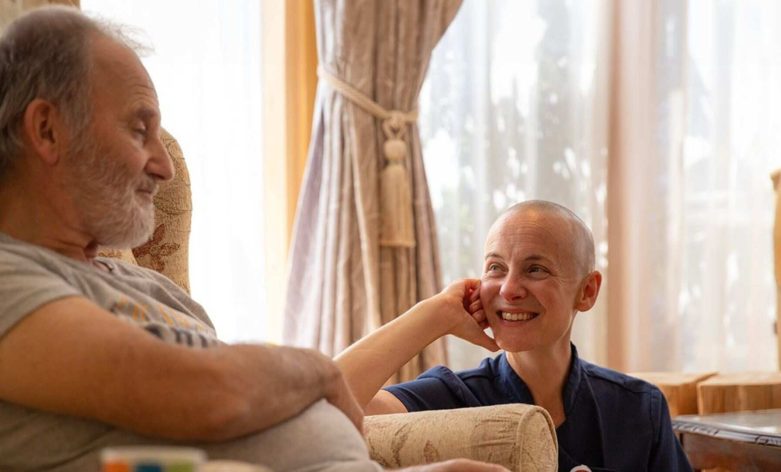
This is where the role goes beyond retail. People don’t just come into the shop to buy things. They come for a break, a chat, a bit of normality. Carers come in with the people they support. Regulars come because it feels safe.
Volunteers get very good at reading the room. Knowing when to chat, when to give space, when a small kindness will land. As one team member said, “Just saying ‘lovely to see you’ can mean a lot.”
You also learn patience — not in a saintly way, just in a grounded, human one. People are complicated. Some are noisy. Some are abrupt. Some just need a bit of time.
And yes — moods can change quickly. Often for the better.

A charity shop is our hospice’s front door
There’s something else going on here too.
Hospices can feel daunting or unknown. Many people still hold outdated assumptions about hospice care, which makes it hard to ask questions or reach out.
At Skanda Vale Hospice, our Newcastle Emlyn charity shop quietly shifts that.
The Skanda Vale Hospice Charity Shop is familiar. Local. Normal. A place where conversations happen naturally — about volunteering, about care, sometimes even about life and death — without it feeling heavy.
In that sense, the shop isn’t just raising money. It’s presence. A gentle way in.
Charity shops, fashion, and values (yes, that too)
Charity retail is also having a moment.
Second-hand fashion, resale, and upcycling are no longer niche. 54% of second-hand shoppers are choosing charity shops because they’re more sustainable, more affordable, and often more interesting than fast fashion.
There’s something appealing about shops that are values-led — where quality matters, waste is reduced, and things are given a second life. It’s ethical without being preachy. Creative without being precious. It’s more than that — charity shops generated £75.3 billion in social value across the UK in 2022 alone. Our charity shop helps to fund our hospice.
Volunteering here puts you right in the middle of that shift.
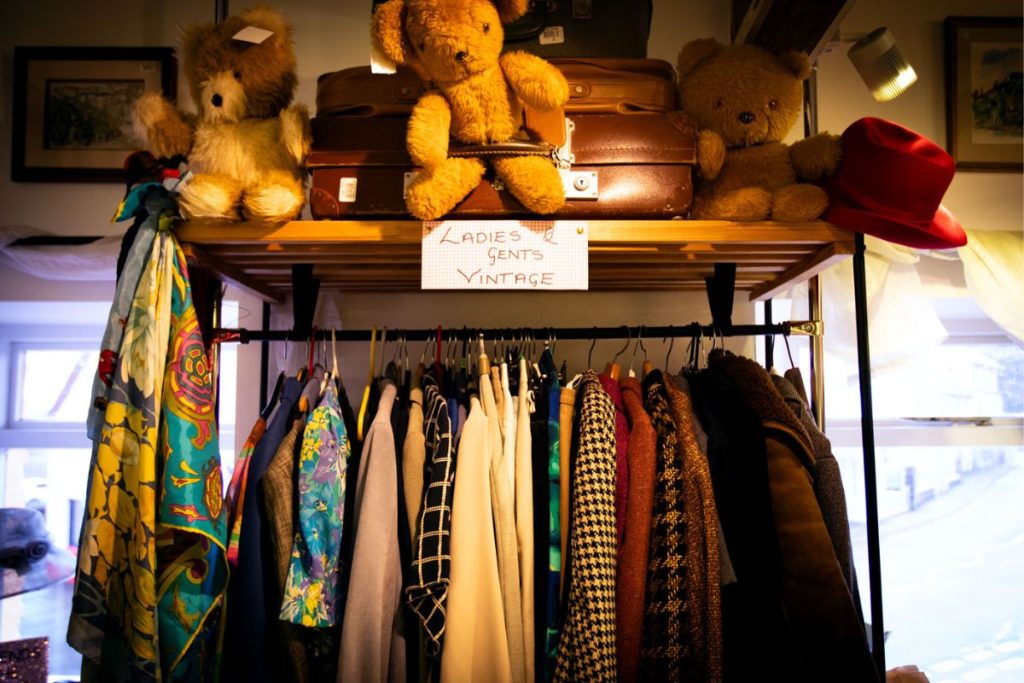
Second-hand shopping isn’t a niche anymore — it’s how many people choose to shop. Charity shops make that choice feel local, values-led, and genuinely worthwhile.
Frequently Asked Questions
What do charity shop volunteers actually do?
Charity shop volunteers help with a mix of practical tasks: sorting and preparing donations, pricing and organising stock, keeping the shop tidy, and serving customers on the till. Some also support online selling by photographing items, writing listings, and helping with packaging and dispatch.
What skills do you gain from volunteering in a charity shop?
Volunteers commonly develop:
- Customer service and communication skills
- Confidence using a retail till
- Organisation and stock presentation skills
- Research and digital skills through online selling
- Judgement, patience, and emotional intelligence
What skills do you need to start volunteering?
You don’t need retail experience. What helps is:
- Reliability and willingness to help
- Patience with people and processes
- Basic communication skills
- Respect for others and for the cause
Everything else is learned along the way.
Final thought
Volunteering in a charity shop isn’t about filling time.
It’s about doing something real, with real people, in a place that quietly matters. If you’re curious, we’d love to hear from you.
It usually starts with a conversation — and often turns into something you didn’t quite expect.
For more inspiration around volunteering, and stories from our volunteers, read our article Why Do People Volunteer? 5 Reasons to Give Back.
Find out more about volunteering at the Skanda Vale Hospice charity shop: